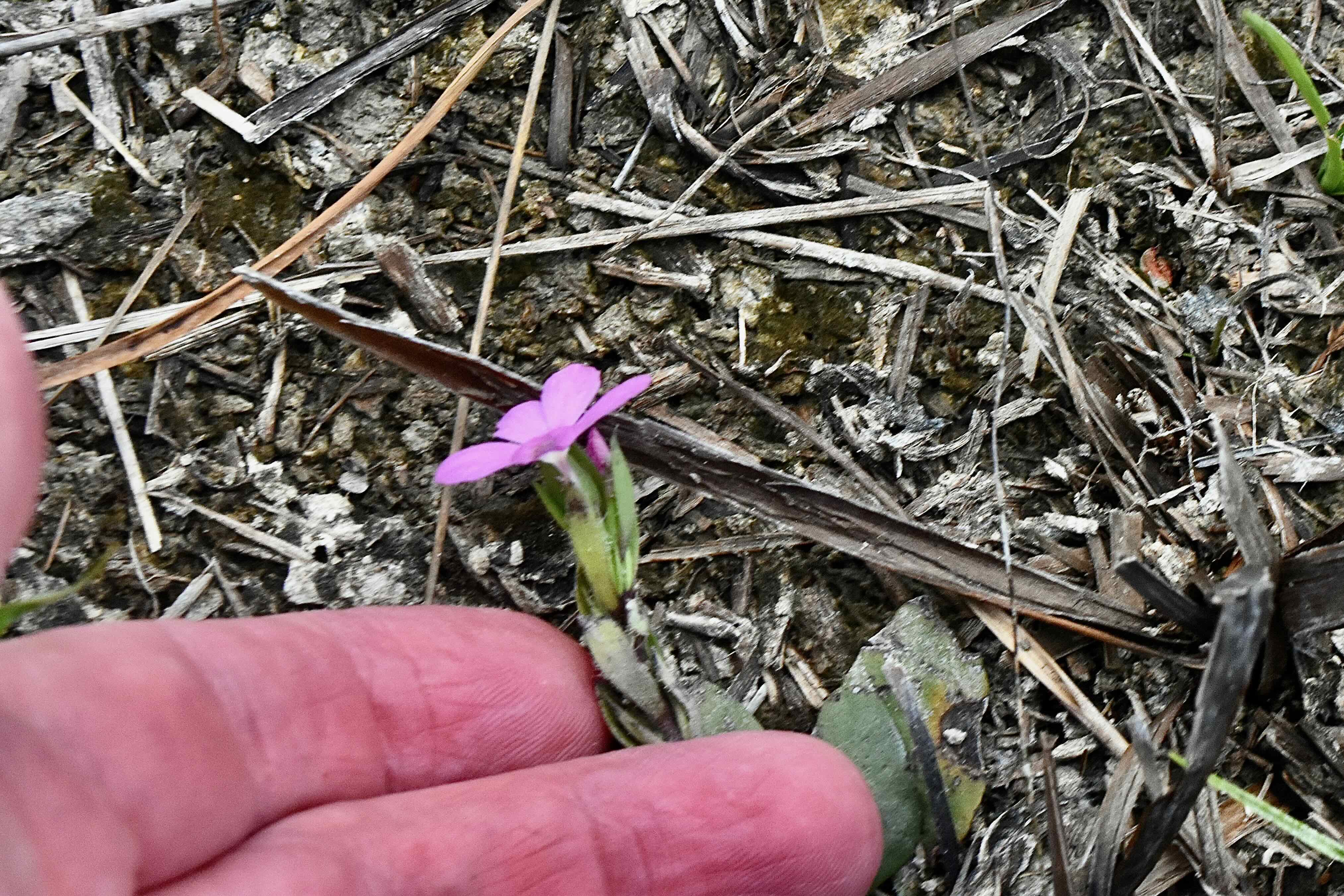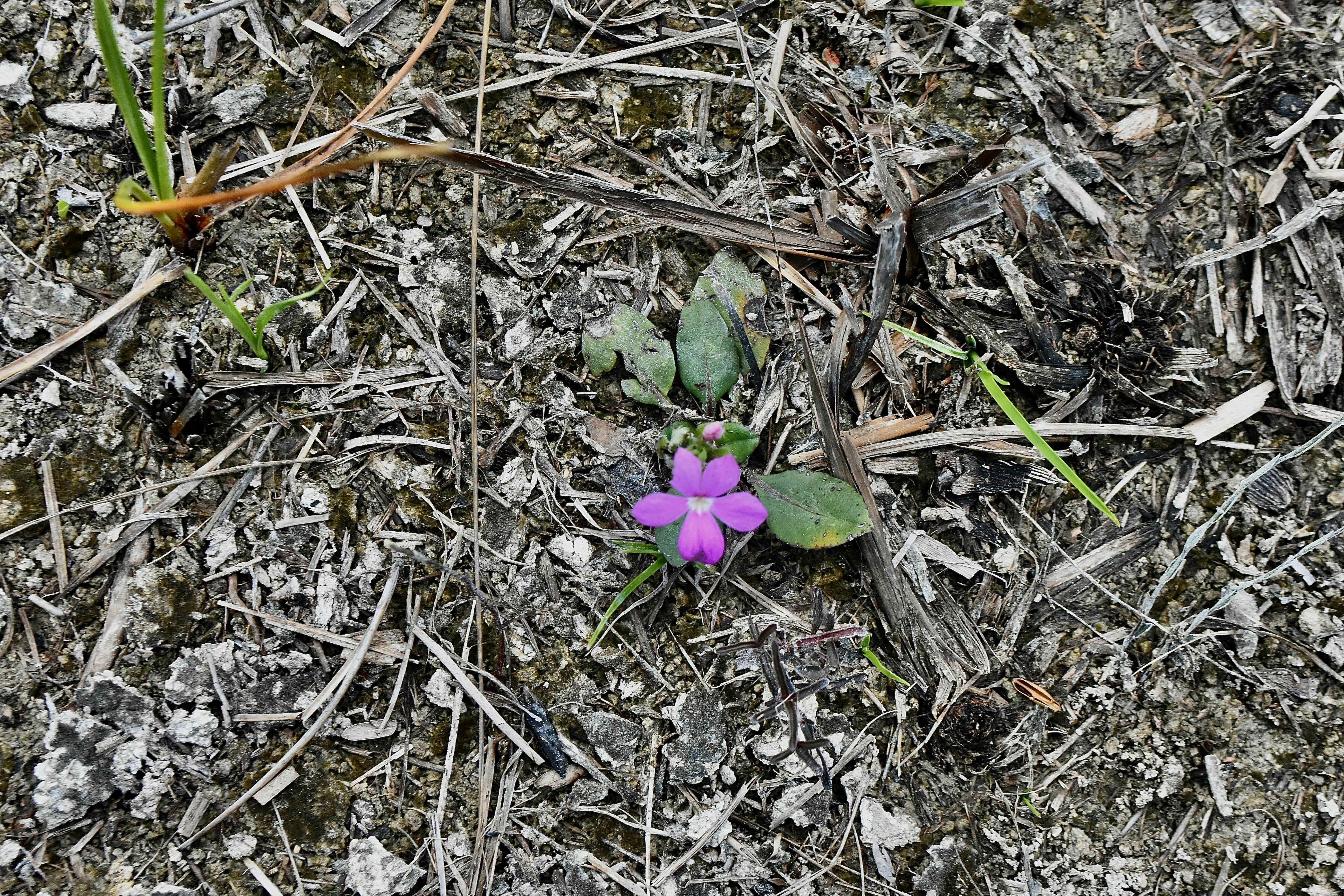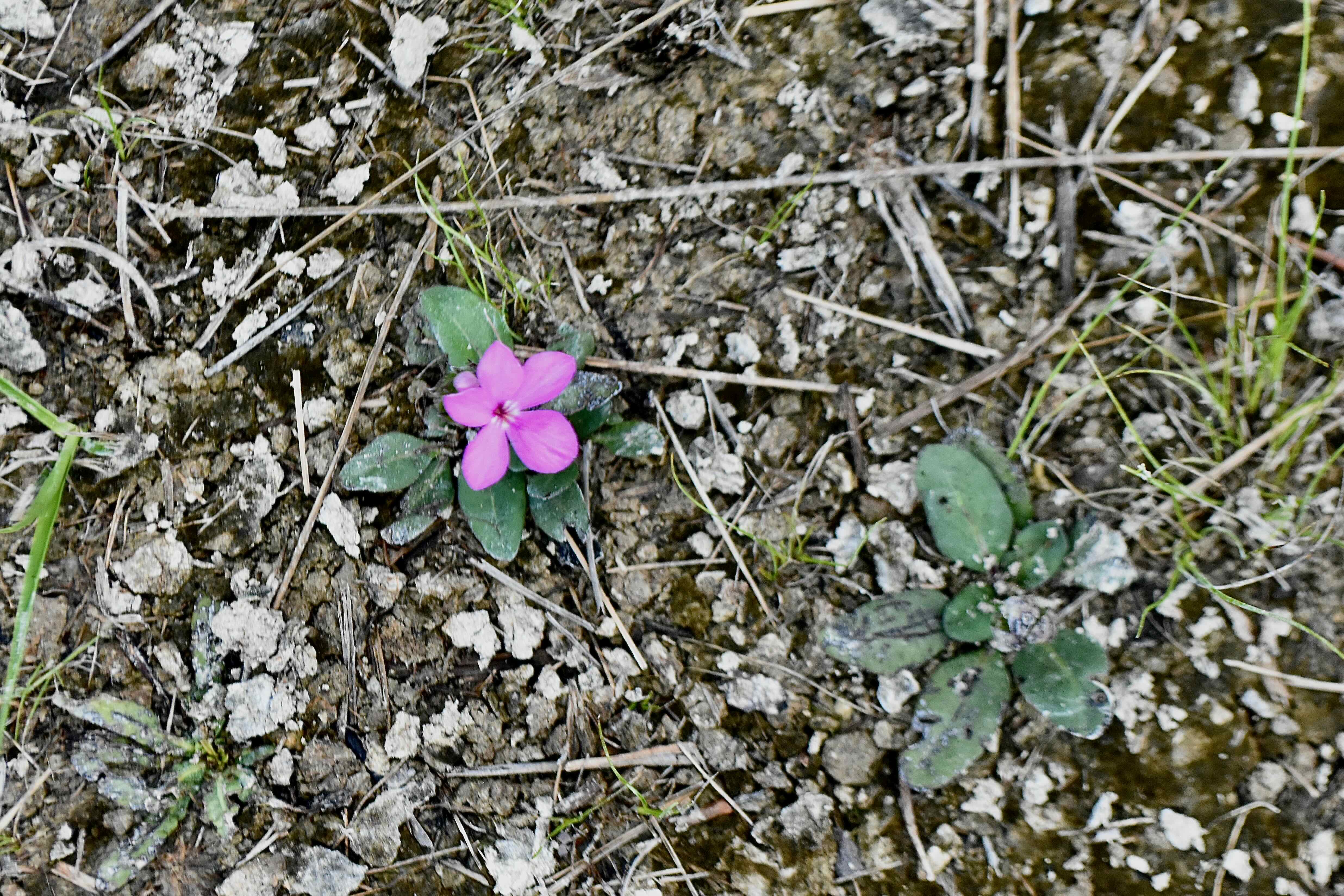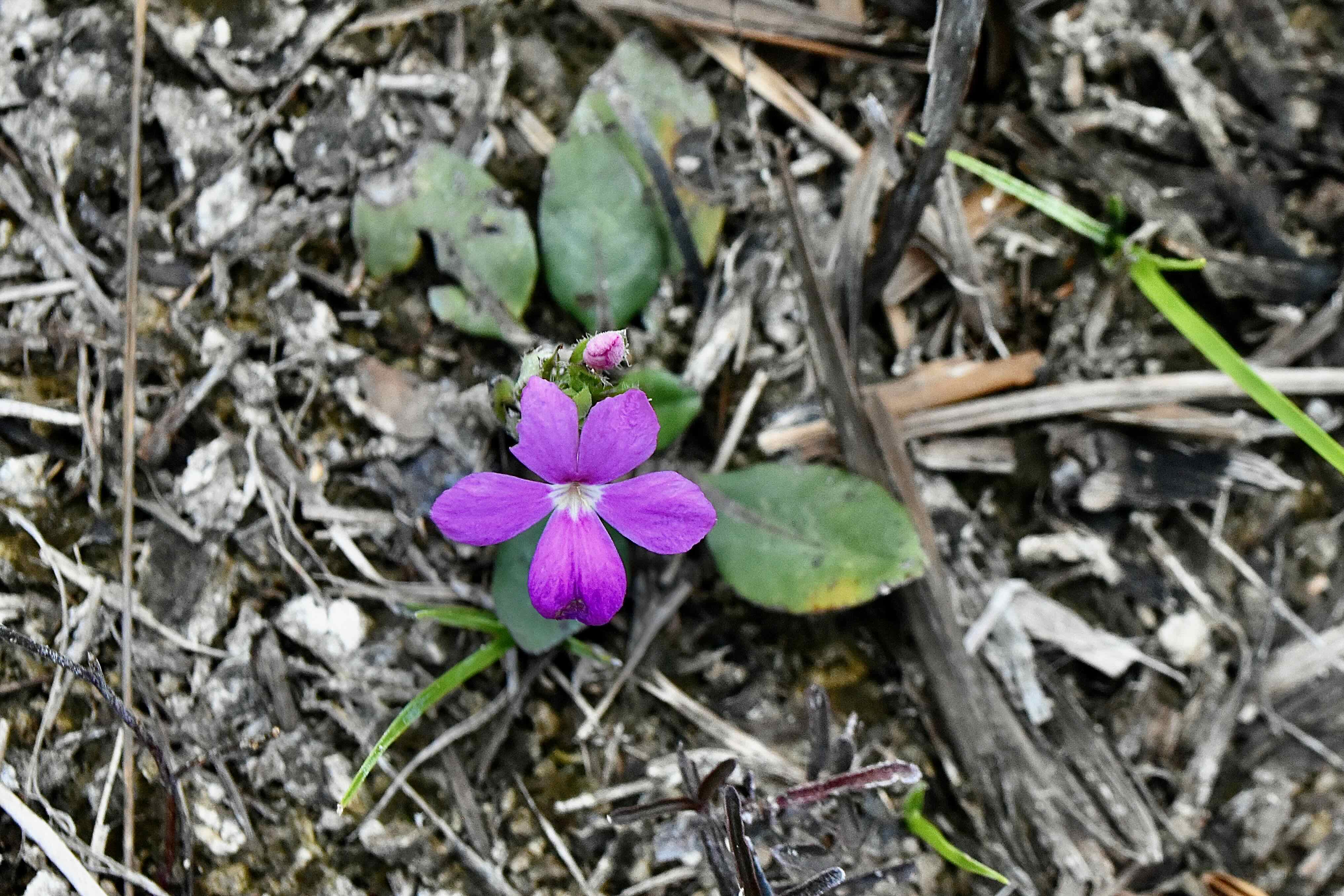
Sweet shaggytuft, photographed at Everglades National Park, Homestead, Miami-Dade County, in May 2025.
Let’s call sweet shaggytuft the Mugsy Bogues of the plant world. NBA fans of a certain age will recall Bogues, who stood only 5’ 3” but played tall enough to carve out a 14-year career as a professional basketball player.
Like Mr. Bogues, Sweet shaggytuft, Stenandrium dulce, is on the diminutive side, reaching only an inch or so off the ground but its flower gives it the "heft" of a much larger plant. It stands out far above its limited elevation.
Sweet shaggytuft is a Florida native found in all of South Florida with the exception of Monroe County, both the Keys and the mainland. It’s found in scattered counties as far north as Citrus and Osceola.
Beyond Florida, sweet shaggytuft’s native range includes six counties in Texas along the Rio Grande Valley and the Gulf Coast, and debatably one county in Georgia where there was a grand total of one vouchered sighting, which may or may not have been in error.
It’s also found in Mexico, Central America and South America as far south as Argentina and Chile.
The Institute for Regional Conservation in Delray Beach considers sweet shaggytuft to be rare within South Florida, but it is widespread and not listed by either the state or the feds.
When not in bloom, flower, sweet shaggytuft is an unremarkable whorl of dull-green, ground-hugging leaves. Its pink to violet flowers are its signature feature. They’re not only hard to miss, they all but shout sweet shaggytuft’s name, making it an easy plant to identify.
Each flower has five pink petals and a white center that is marked by some veining. The flowers are about an inch across in total and sit atop a three- or four-inch stem. Sweet shaggytuft blooms all year. Butterflies probably pollinate the plant, but what species isn’t clear.
While we’re discussing the flowers, we should mention that its genus name, Stenandrium come from Greek words meaning tight anthers. The anthers are part of the stamen, the male parts of the flower. Dulce, of course, is sweet. What’s sweet about sweet shaggytuft we’re not sure other than its flower might be said to be sweet-looking. And shaggytuft? Possibly its hairy leaves, but that’s only a guess.
Now back to our story: Sweet shaggytuft takes to wet habitats, pinelands and prairies with open spaces and nutrient-poor soils. It likes full sun, but can live with a little shade. We found these plants just off the Long Pine Key Trail in Everglades National Park along the edges of a wet prairie.
It is somewhat drought tolerant, capable of surviving short periods with minimal rain. It also can survive minimally freezing temperatures as evidenced by its natural range.
Sweet shaggytuft is a perennial.
Sweet shaggytuft has minimal uses for us humans. It is cultivated and sold occasionally by nurseries that specialize in Florida native plants. It’s used in restorations and in wild flower gardens.
The Seminoles had medicinal uses for sweet shaggytuft, however. The plant (and others) would be used as a baby’s charm, protecting the child against fears caused by dreams of raccoons and possums. They also made a decoction from it for a bath to treat something they called hog fever (the Seminoles would attach animal names to certain diseases or conditions).
Sweet shaggytuft is also commonly known as pinklet. Taxonomically speaking, it is split into two subspecies, or varieties, S. dulce var. dulce found throughout the American portion of its natural range, and S. dulce var. floridanum, which is restricted to the Sunshine State. Sweet shaggytuft is a member of Ancanthaceae, the family of wild petunias.
Everglades National Park
Photo Gallery — Click on photo for larger image