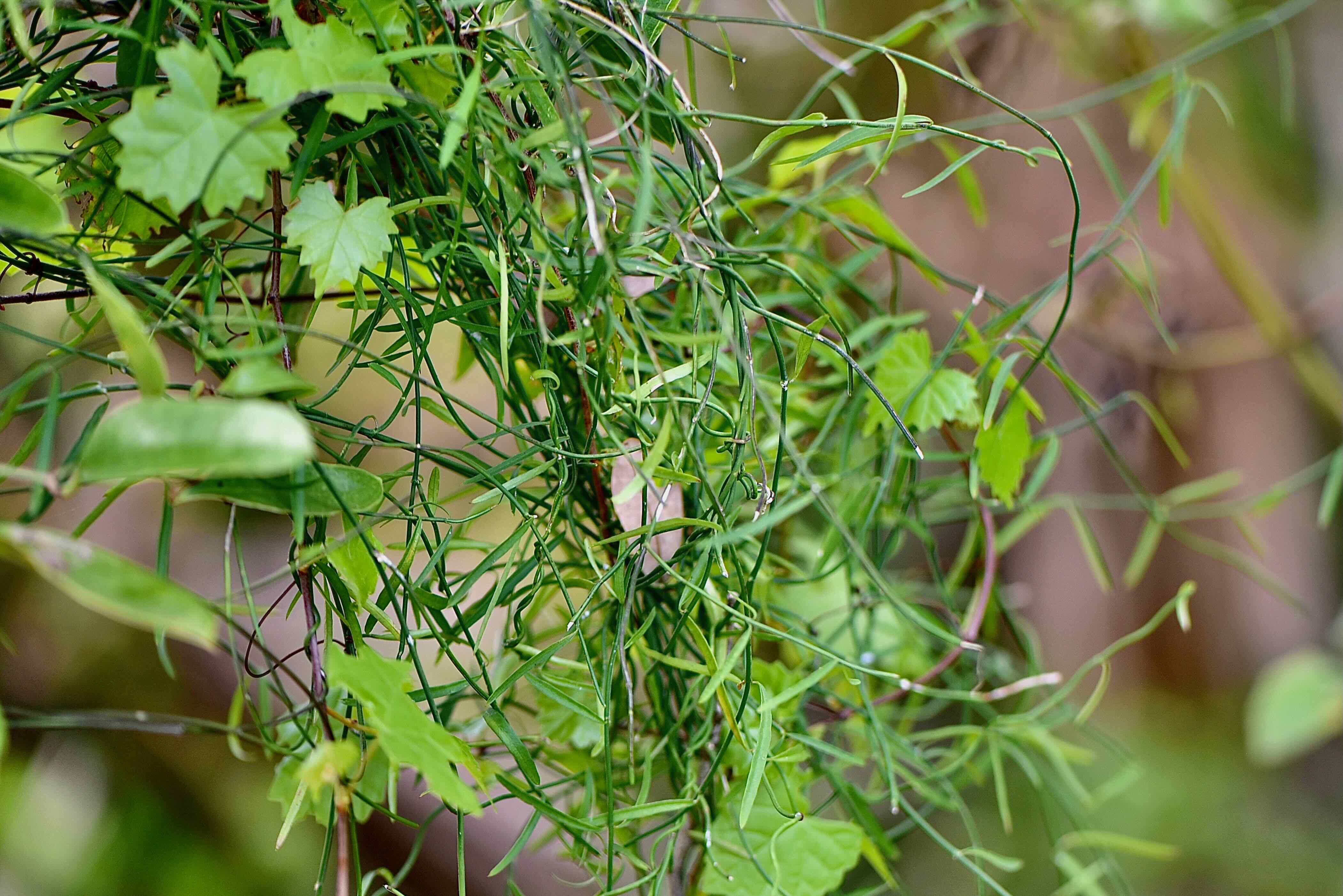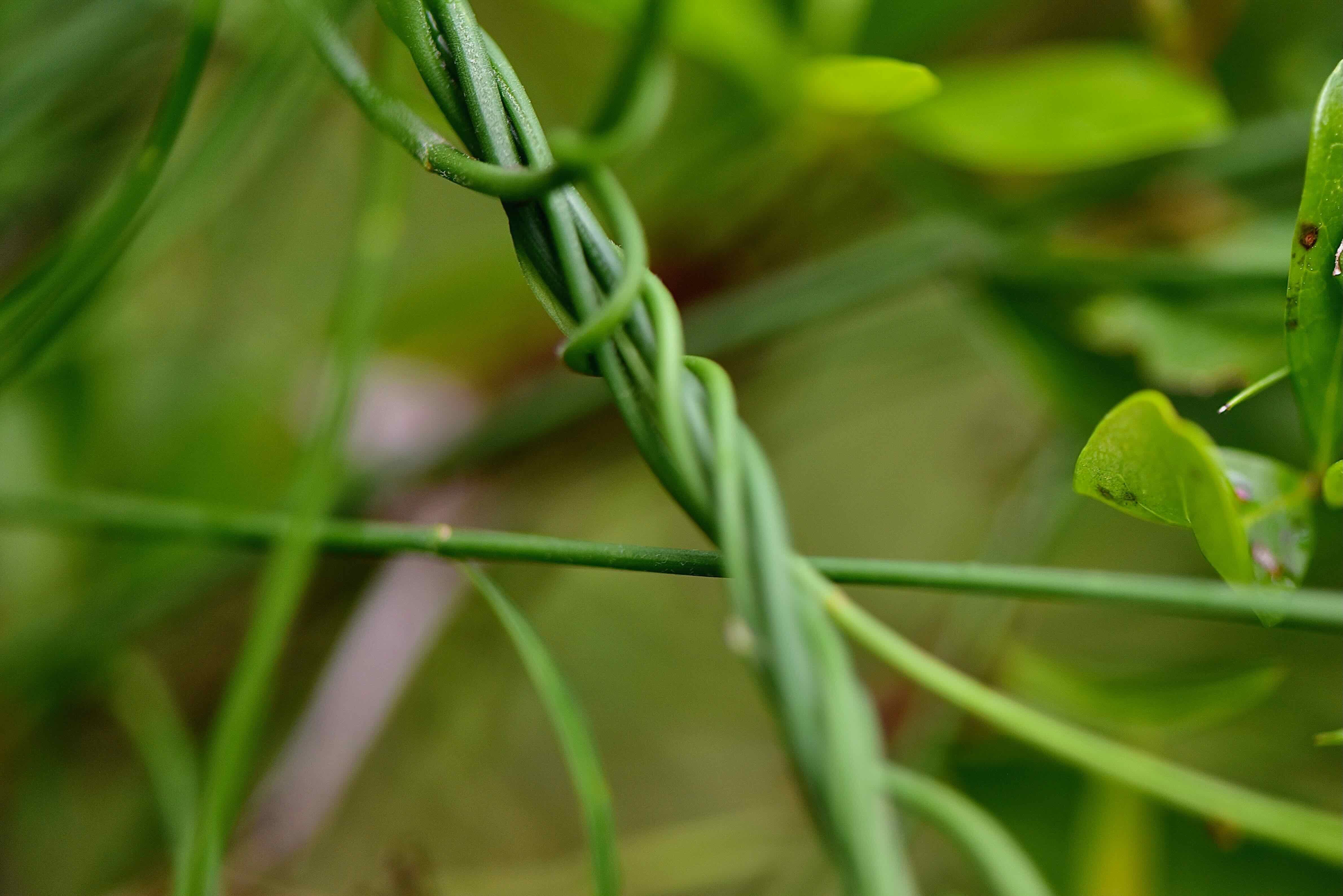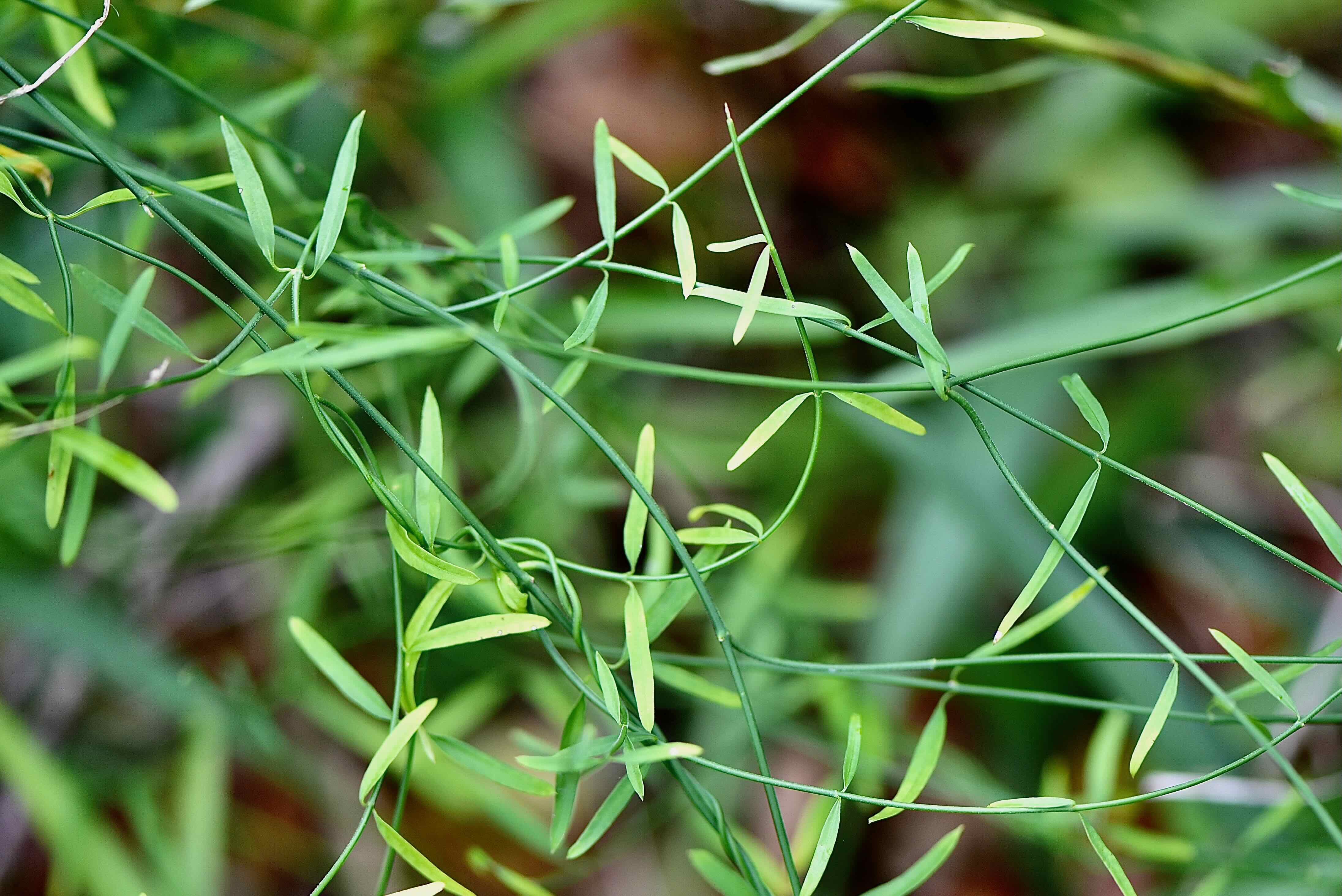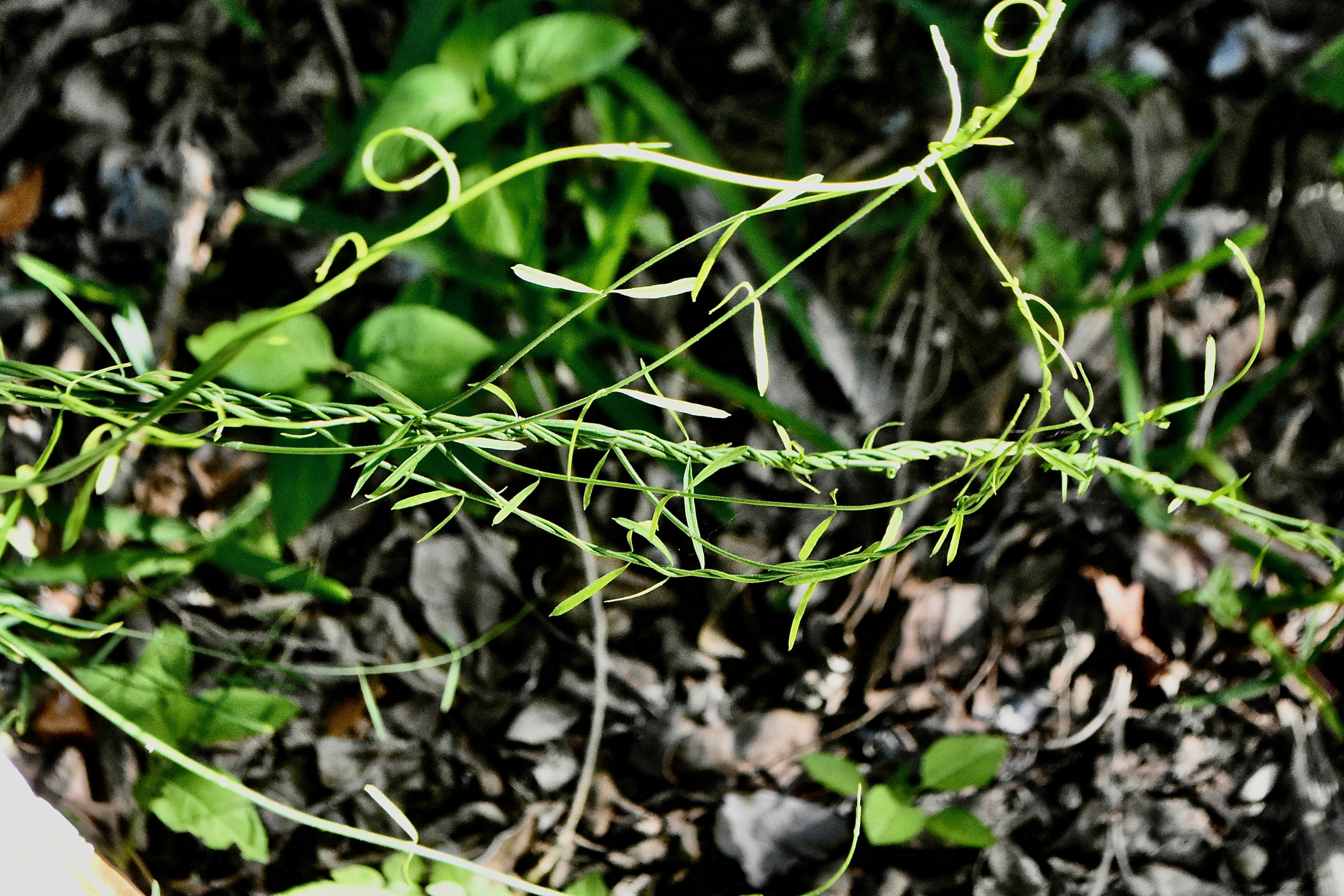
The name is a bit of an overstatement. Leafless swallowwort, Orthosia scoparia, isn't quite leafless. But this twisting little vine does have a habit of dropping leaves to the point that some parts of the plant are left nearly bare especially as it ascends out of the shady understory toward the sky.
It is a member of the milkweed family and in fact often called climbing milkweed by various sources.
Leafless swallowwort is a Florida native found throughout the Peninsula and in a few Panhandle counties. It’s found in all South Florida counties and is widespread throughout the region. The Institute for Regional Conservation in Delray Beach considers it “apparently secure.”
It’s also found in exactly one county in southeastern Georgia and one county in southeastern South Carolina. The U.S. Department of Agriculture’s PLANTS Database also includes Alabama within leafless swallowwort’s range but has no county level data.
Cuba, Hispaniola (Haiti and the Dominican Republic) and the Bahamas are also part of its natural range.
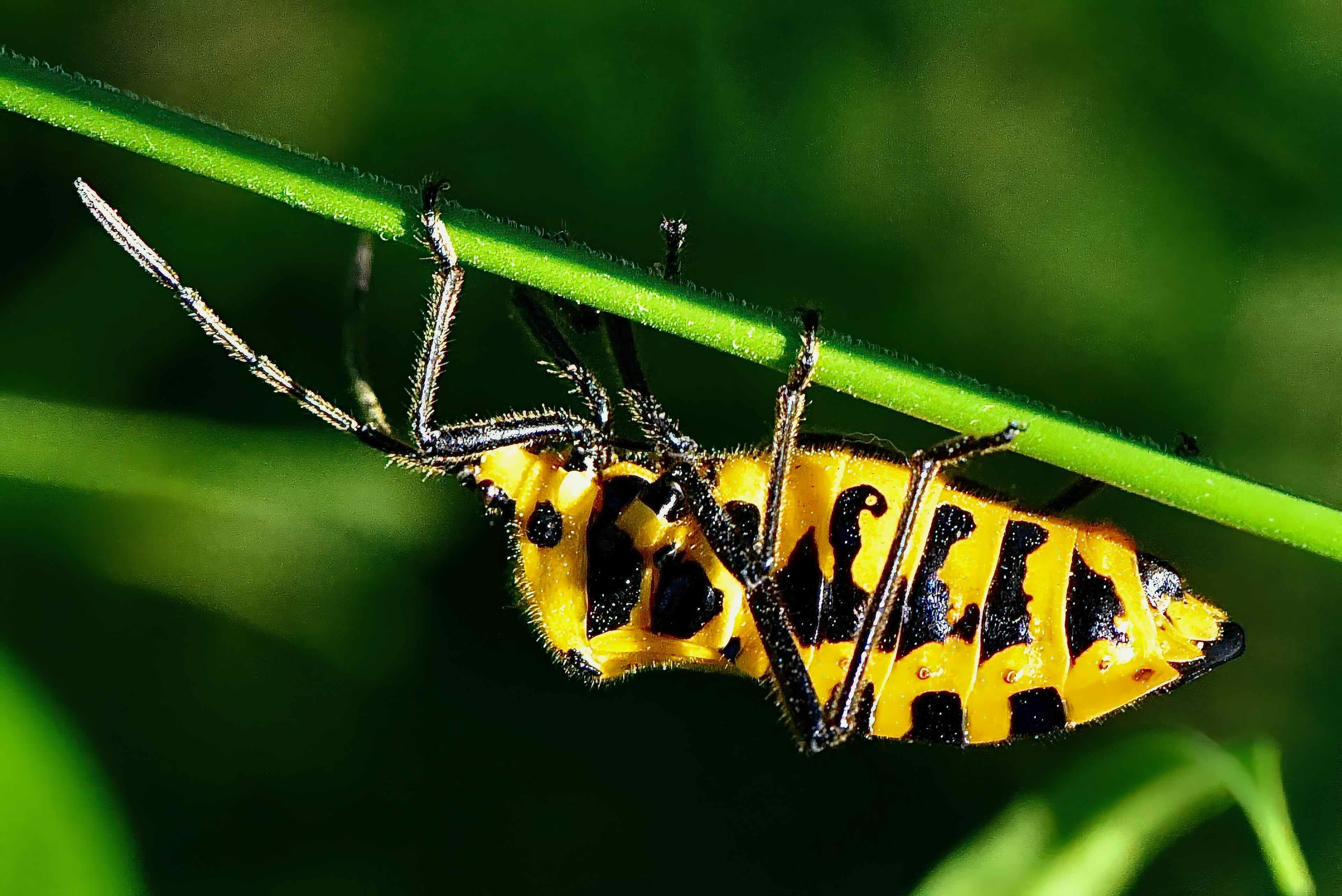
It's one of those plants that can easily go unnoticed, kind of a massive tangle of nothingness as you walk through the woods. As far as we know, it has no human uses other than perhaps as cordage. It does flower but they're not the brightest blooms. In fact, the first time we really encountered leafless milkwort, it was a bright yellow-orange insect called a giant milkweed bug that caught our eye and not really the plant itself. It wasn't until we started doing some research on the milkweed bug that we took an interest in the plant it was sitting on.
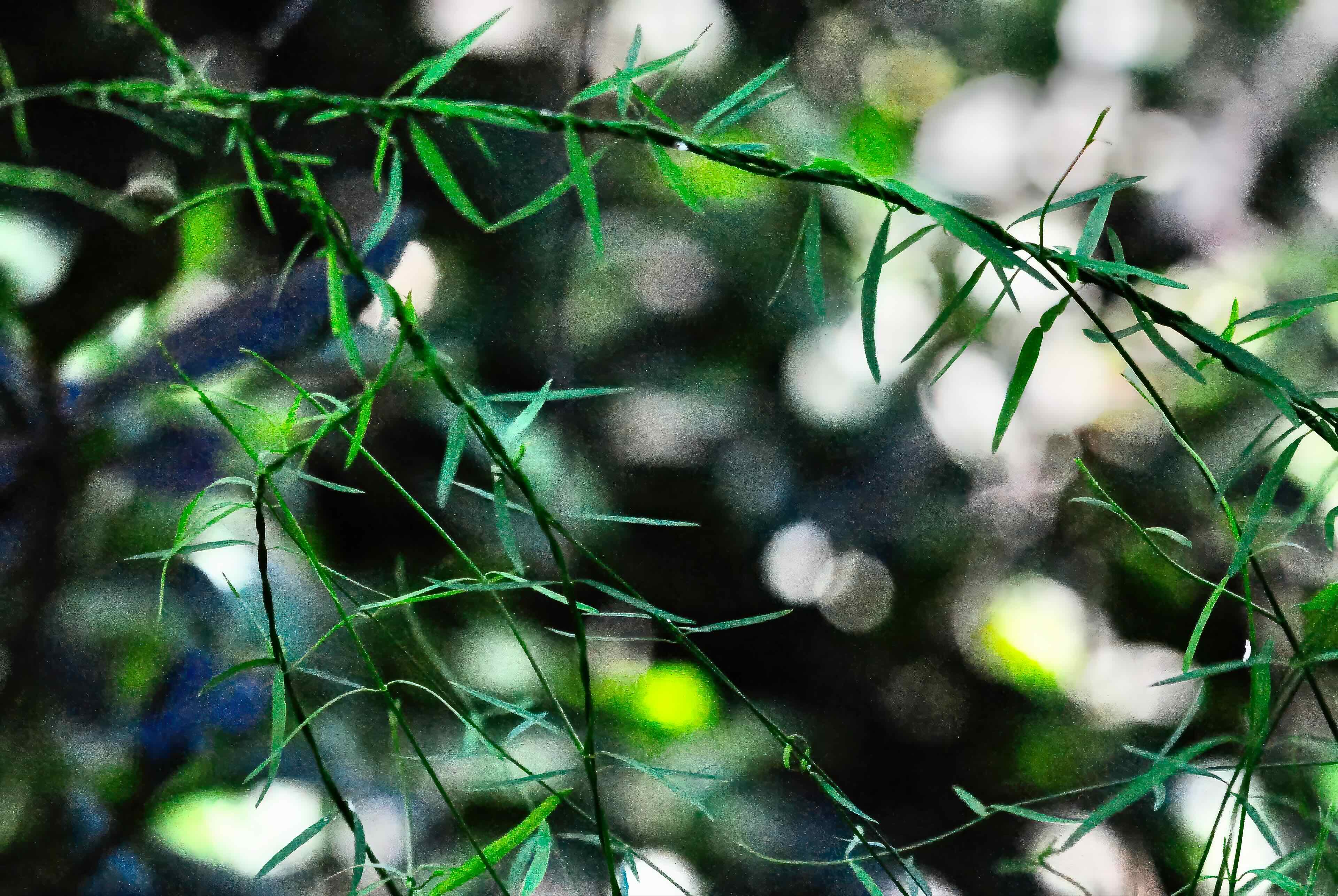
As a young plant, leafless swallowwort, has pairs of relatively long, narrow leaves along its multitude of twining stems, soaking up as much sunshine as possible in the understory of coastal and upland hammocks where the plant tends to be found.
It's a wisp of a plant; it will twist and twine on itself and clamber over neighboring plants in order to assume any height. At Yamato Scrub we've seen it climb nearly 10 feet into a nearby tree. Once it gets tall enough to escape the shadows, leafless swallowwort lives up to the name and begins dropping leaves, relying on chlorophyll-bearing stems to turn sunlight into the sugars that stokes its life.
Why? The theory is leaves are extraneous at that point since the stems are capable of photosynthesis, and dropping the leaves helps the plant retain water. But even the upper reaches of the plants we've seen weren't totally bereft of leaves.
Flowers are star-like, small, greenish-yellow or greenish-white and come in inflorescences (stalks) that form at nodes, with four to 10 blooms each. Flowers appear year round. One personal observation, or more precisely the lack there of: We've not seen the plant in bloom. We'll keep looking.
It is a milkweed, and like milkweeds generally, leafless swallowwort pollen is clumped into packages called pollinia, so a single visit by a pollinator can pick up the genetic material one flower has to offer and deposit it on another.
We mentioned the giant milkweed bug, Sephina gundlachii, above. Leafless swallowwort is the sole host plant for its larvae. One oddity: the giant milkweed bug — it is what scientists call a true bug — lays its eggs on the plant that supporting leafless swallowwort. They then make the switch after they hatch.
Taxonomy time. It’s gets a little complicated, but here goes. Once upon a time, leafless swallowwort went by the binomial, or scientific name of Cynanchum scoparium. Much of the literature still uses that name. But earlier this century scientists decided to slice and dice Cynanchum into different genera, and in the process, leafless swallowwort became Orthosia scoparia.
The experts at Delray Beach’s Institute for Regional Conservation as well as the authoritative Atlas of Florida plants use O scoparia as the accepted name and consider C scoparium as a synonym. A synonym is a binomial, or scientific name placed on a plant or animal that for one reason or another isn’t accepted by the scientific community.
On the other hand, the U.S. Department of Agriculture’s PLANTS Database uses the old name and doesn’t mention O scoparia.
It should be noted here that in the literature on the giant milkweed bug that leafless swallowwort is frequently called climbing milkweed, with C scoparium as the binomial name. Despite the apparent discrepancy, it’s still our old friend, leafless swallowwort.
Oddly enough, Orthosia is also used as the name of a genus of moths.
Scoparia is Latin meaning broom.
In days gone by, leafless swallowwort was included in Asclepiadaceae, the milkweed family. Milkweeds generally, including our guy, have been moved into Apocynaceae, the dogbane family.
Another common name for leafless swallowwort: hairnet vine. It’s also spelled leafless swallow-wort.
Yamato Scrub Natural Area
Photo Gallery — Click on photo for larger image