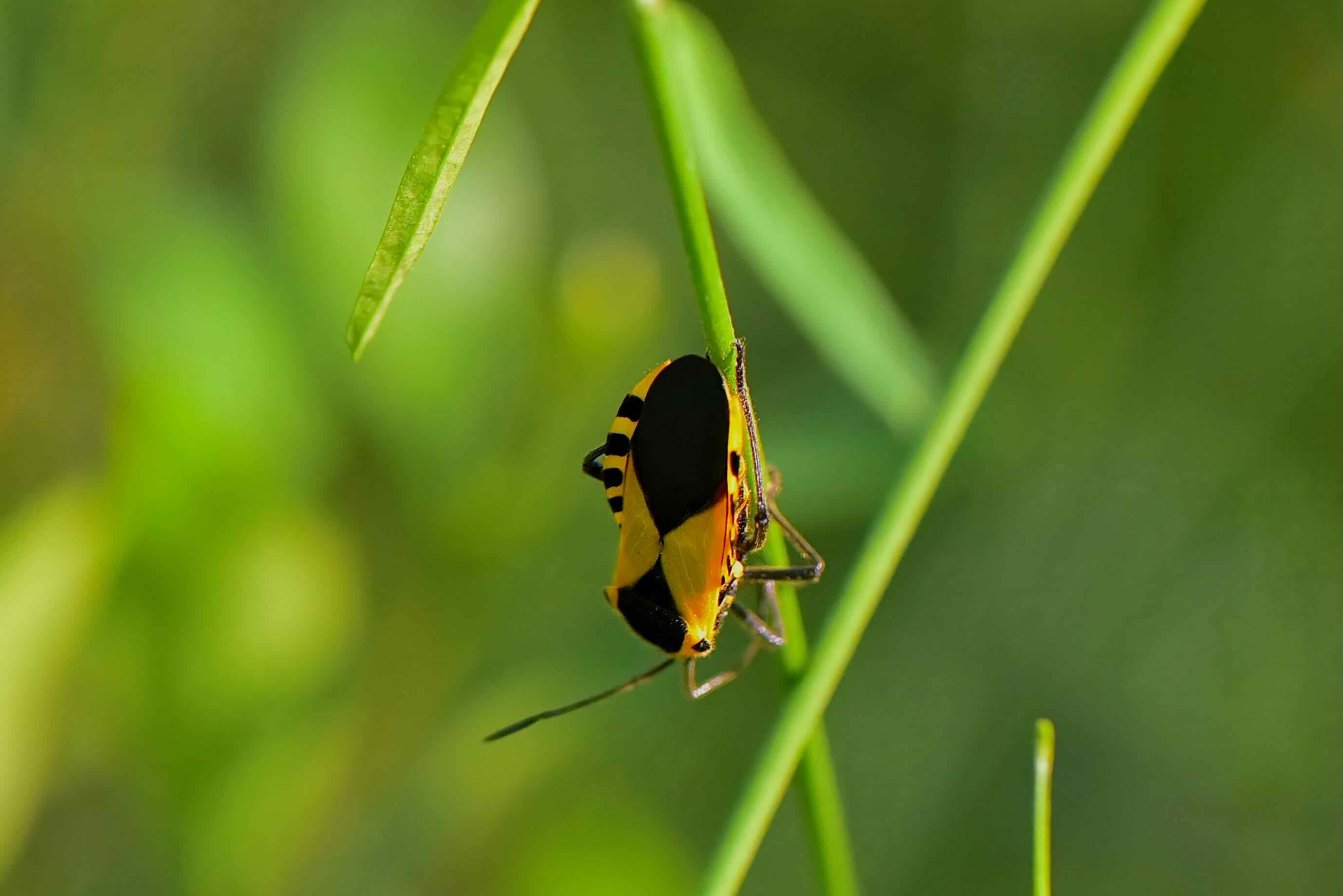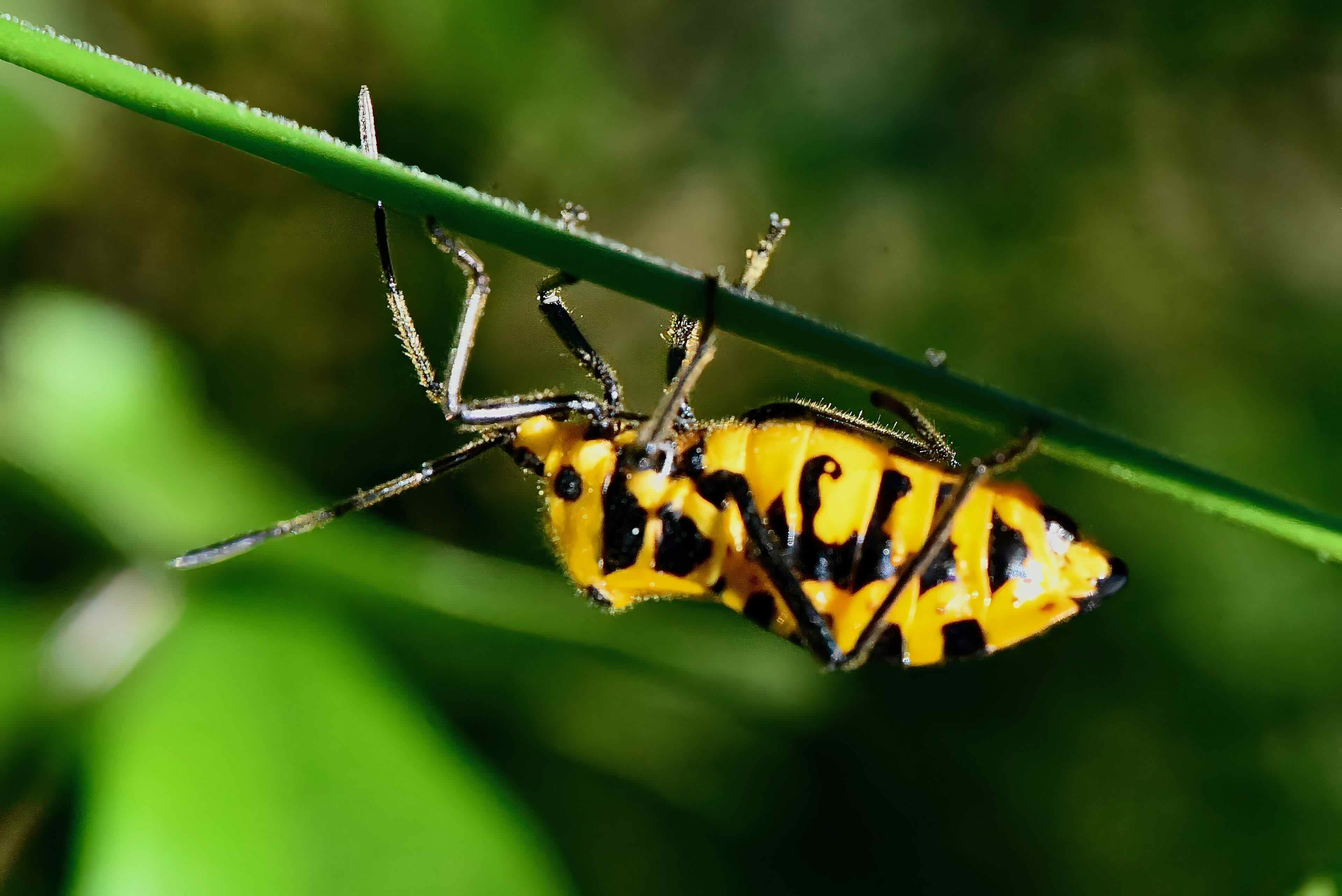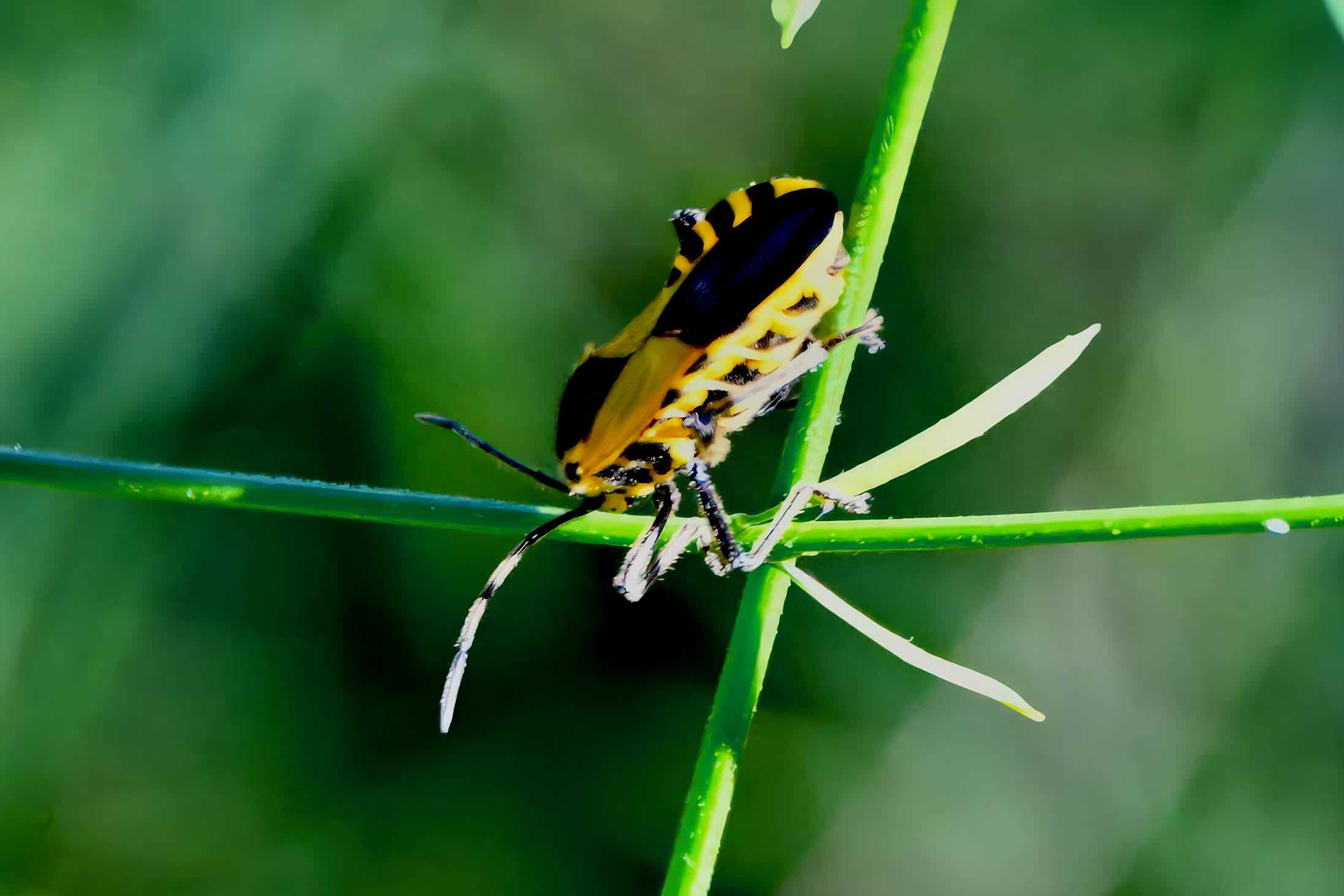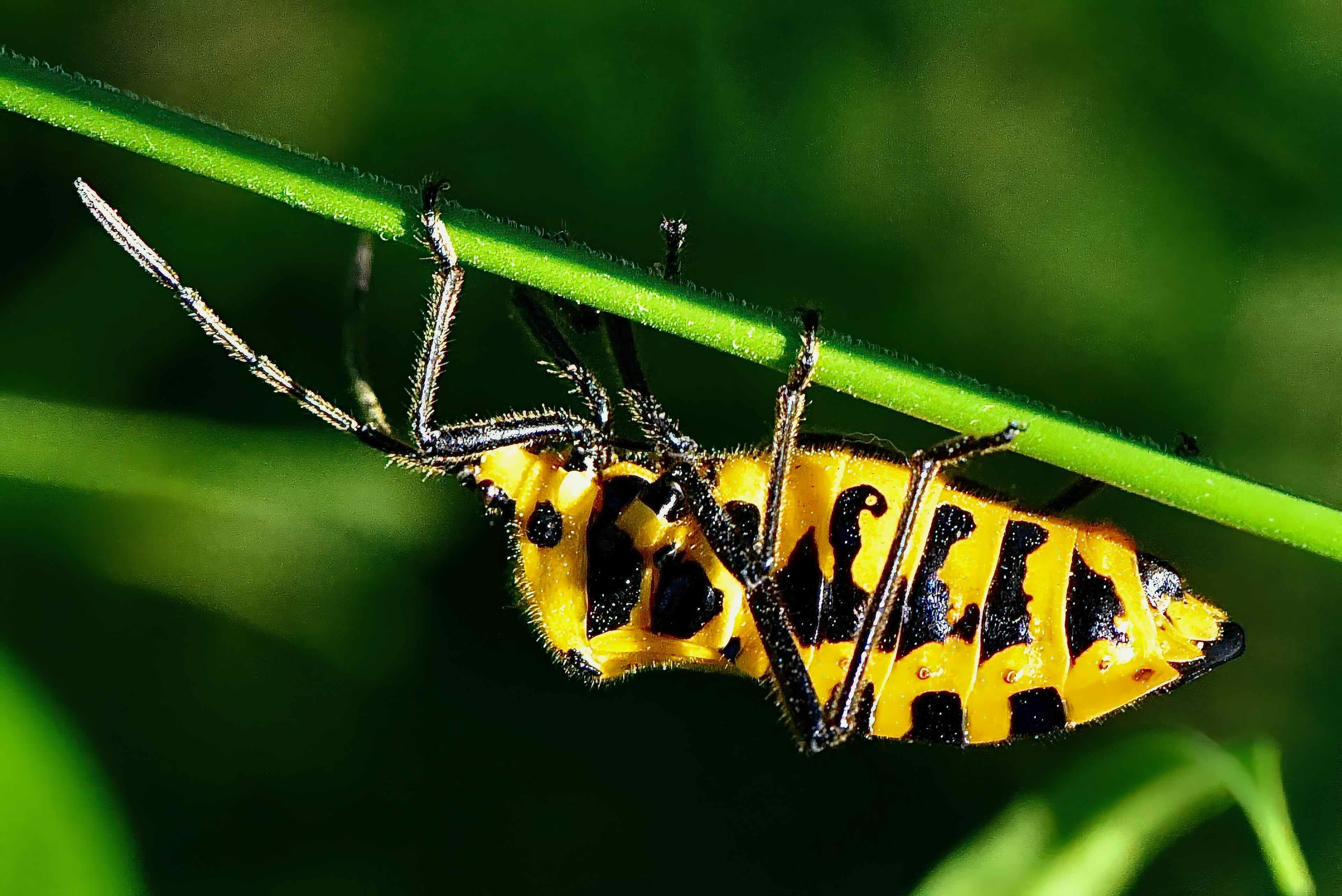
There are bugs and then there are true bugs. We think of creepy-crawlies — insects, spiders, anything with more than four legs, really — generically as bugs.
But to entomologists, the term bug has a specific meaning: insects that don’t have biting mouth parts — jaws, mandibles and such — but rather suck their meals, out of a straw-like proboscis.
Think aphids or cicadas, or our subject for the day, the giant milkweed bug, Sephina gundlachii. Why the term is reserved for these animals we, frankly, don’t know. All are members of the order Hemiptera.
A quick note: There is a similar-looking insect called the large milkweed bug and another called the small milkweed bug. They’re also true bugs, but despite similar appearances, they are not related to our guy.
Giant milkweed bugs are not really giants, going only about two-thirds of an inch in length, but they are about a third larger than large milkweed bugs. They’re a bright yellow-orange with black markings above and below, also similar to large milkweed bugs as we noted above. The markings are sufficiently different that it isn’t difficult to tell the two apart sans measuring stick.
Giant milkweed bugs are found throughout the Peninsula roughly from Central Florida south and and into the Caribbean.
The leafless swallowwort is the sole larval host for the giant milkweed bug. One strange behavior: females don’t lay their eggs directly on leafless swallowwort, a clambering, twining vine that props itself up using a neighboring plant. Instead, they lay their eggs on the plant propping up leafless swallowwort.
It’s not unusual to see clusters of giant milkweed bugs on leafless swallowwort. And with their bright colors, they’re seemingly easy pickins’ for predators.
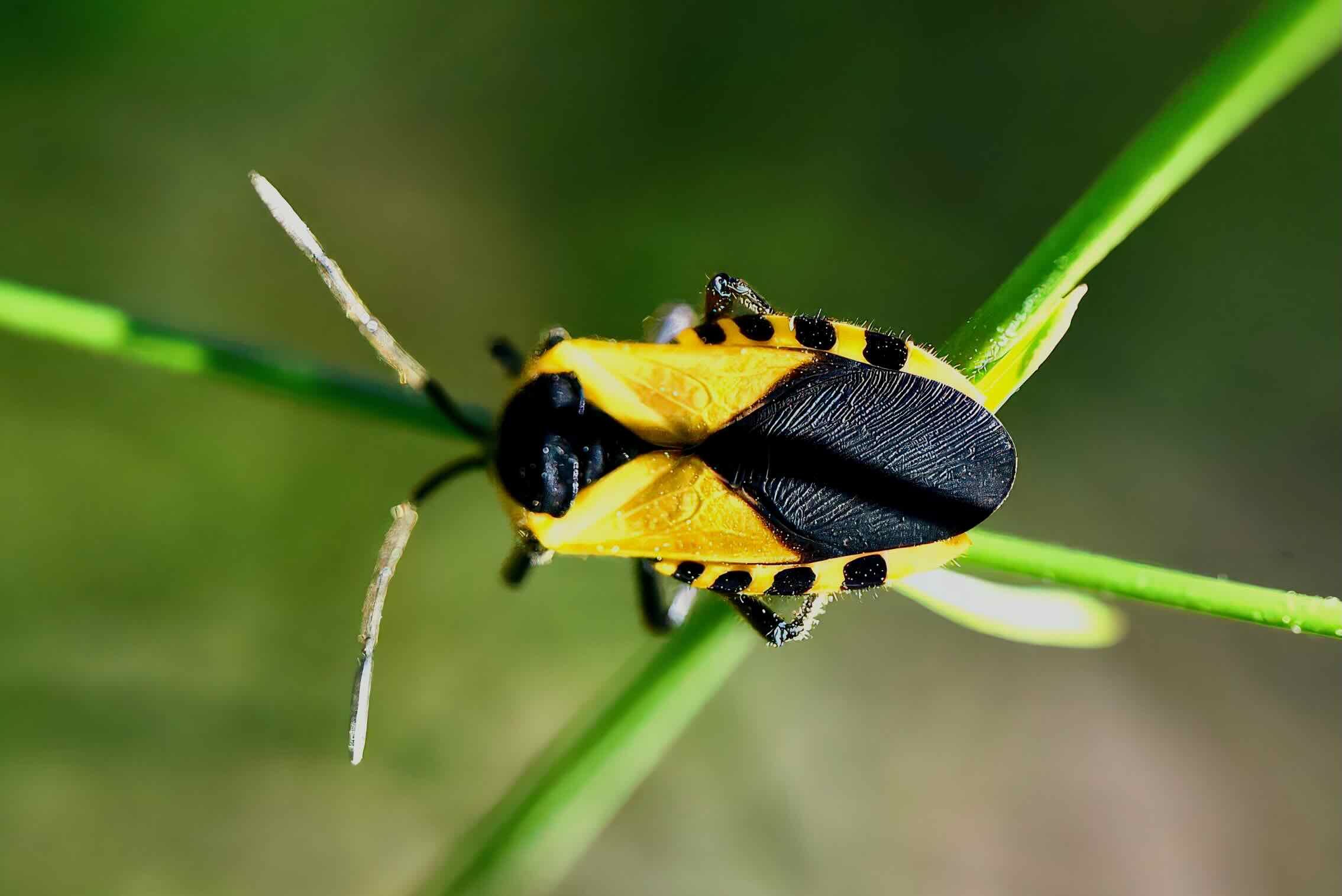
But not so fast. Giant milkweed bugs are practitioners of aposematic defense. What’s that, you might ask? Basically those bright colors tell predators, birds in particular, “eat me and you die.” Or more accurately, “eat me and you’ll become so sick that you’ll wish you died.” A bird might pick off one, eat it, get sick and learn to associate brightly colored insects with the experience. It will pass the lesson on to its offspring. One giant milkweed bug dies so others might live.
How does it work? Leafless swallowwort is in the same family as milkweeds, Apocynaceae. In fact, in literature you’ll see it referred to as climbing milkweed. Like milkweeds, it contains certain poisonous chemicals that giant milkweed bug larvae pick up as they munch on the plant.
These chemicals give adult giant milkweed bugs their orange and black coloration. It also makes them poisonous. The bright colors loudly announce the danger of eating one.
It’s the same color combination and defense that monarch and similarly colored butterflies employ so it reinforces each other despite the differences in species. Scientists call this Mullerian mimicry.
As we said, true bugs have sucking mouthparts rather than biting parts. Giant milkweed bugs use their beaks to penetrate the skin of a plant, usually on the stem or fruit, inject an enzyme that liquifies the plant flesh and then sucks up the juice. Yum!
A few notes: the species name, gundlachii, honors 19th century naturalist Juan Grundlach. Grundlach was born in Germany and moved to Cuba, where his work on birds of the island became well known. The name is sometimes spelled grundlachii; also gundlachi or grundlachi.
Sephina apparently comes from the Arabic word Safah, meaning to speak or declare. We’re guessing that giant milkweed bug’s bright colors might be the inspiration for the name.
Giant milkweed bug is a member of Coreidae, the leaf-footed bug family. It’s also called the squash bug family.
Yamato Scrub Natural Area
Photo Gallery — Click on photo for larger image