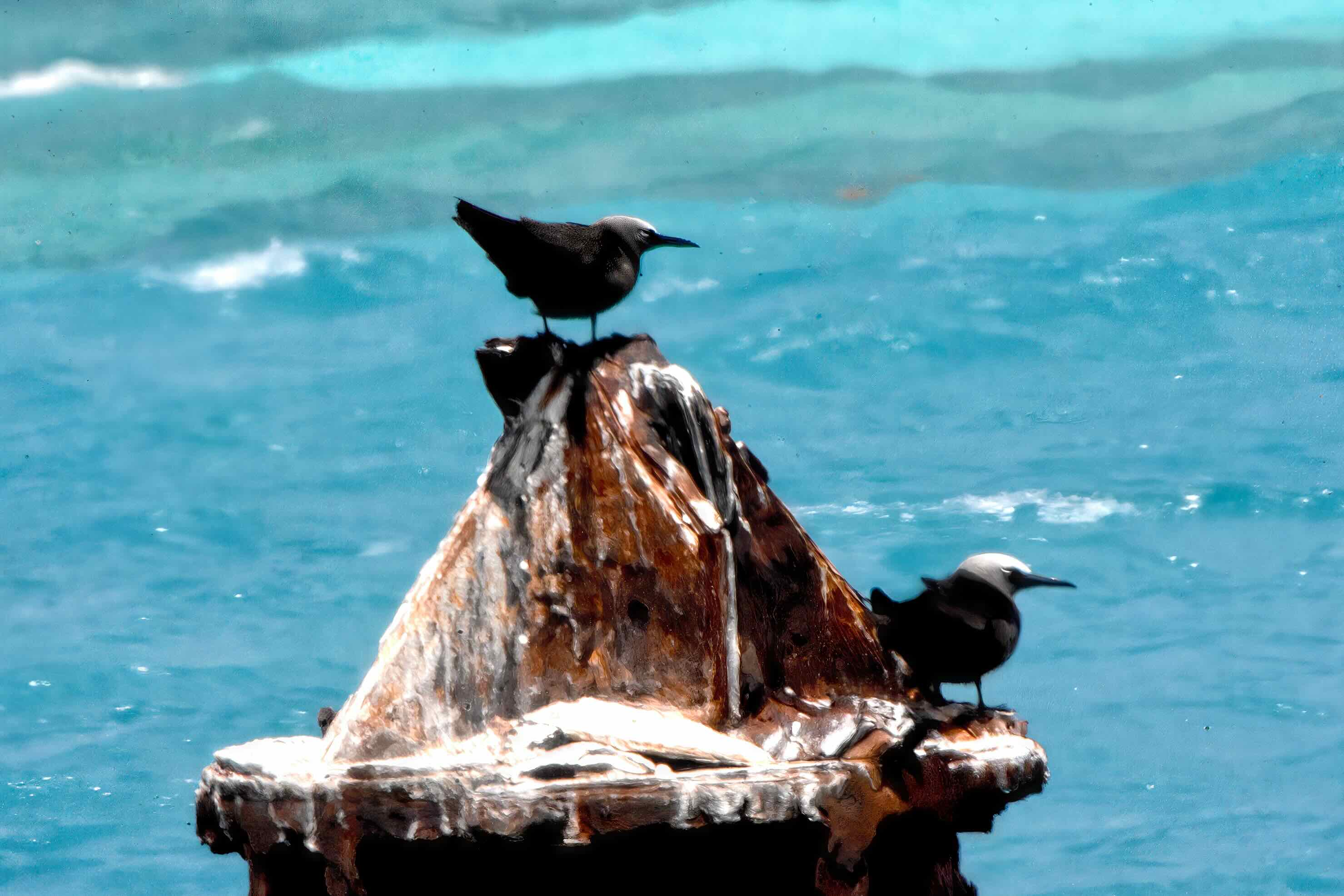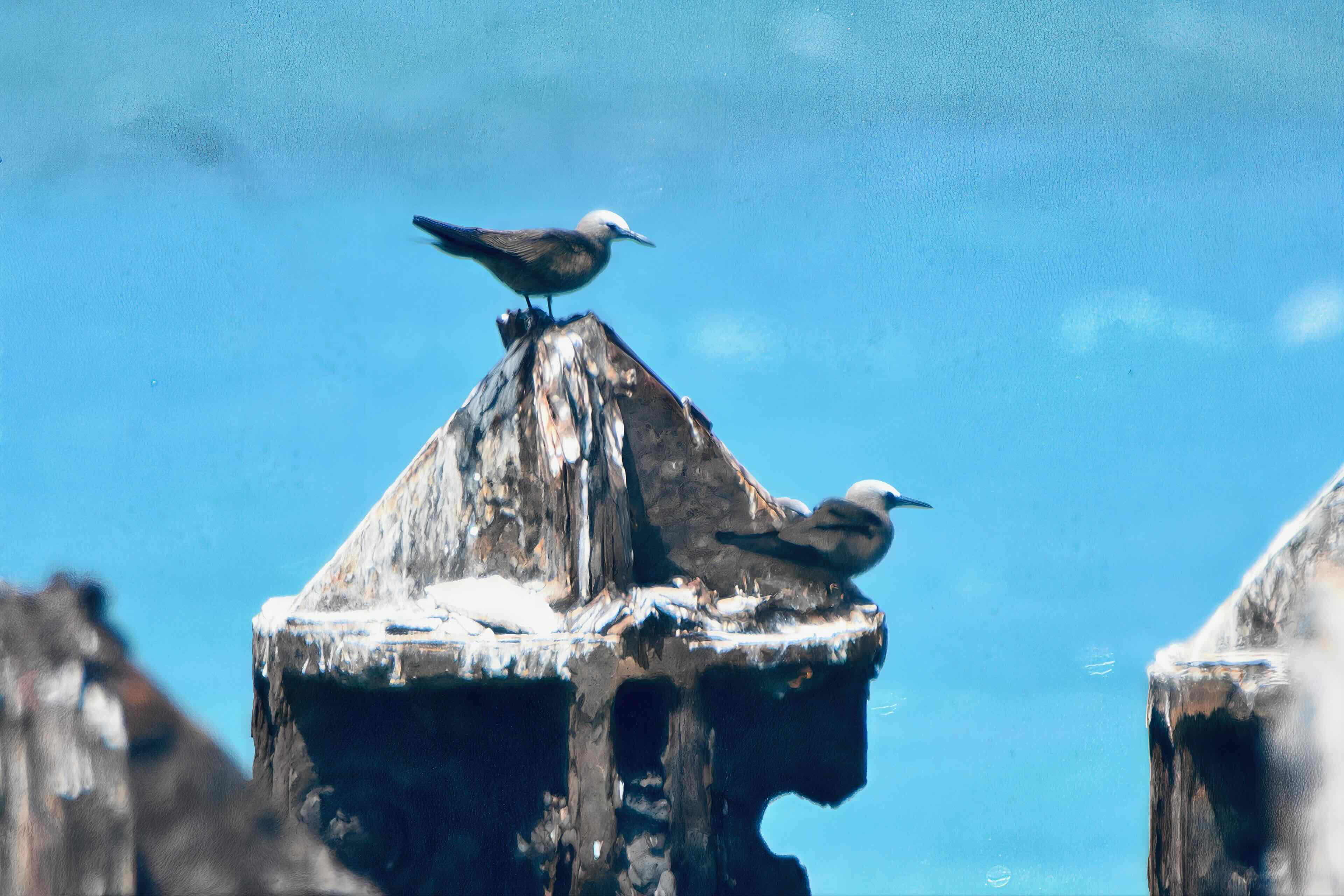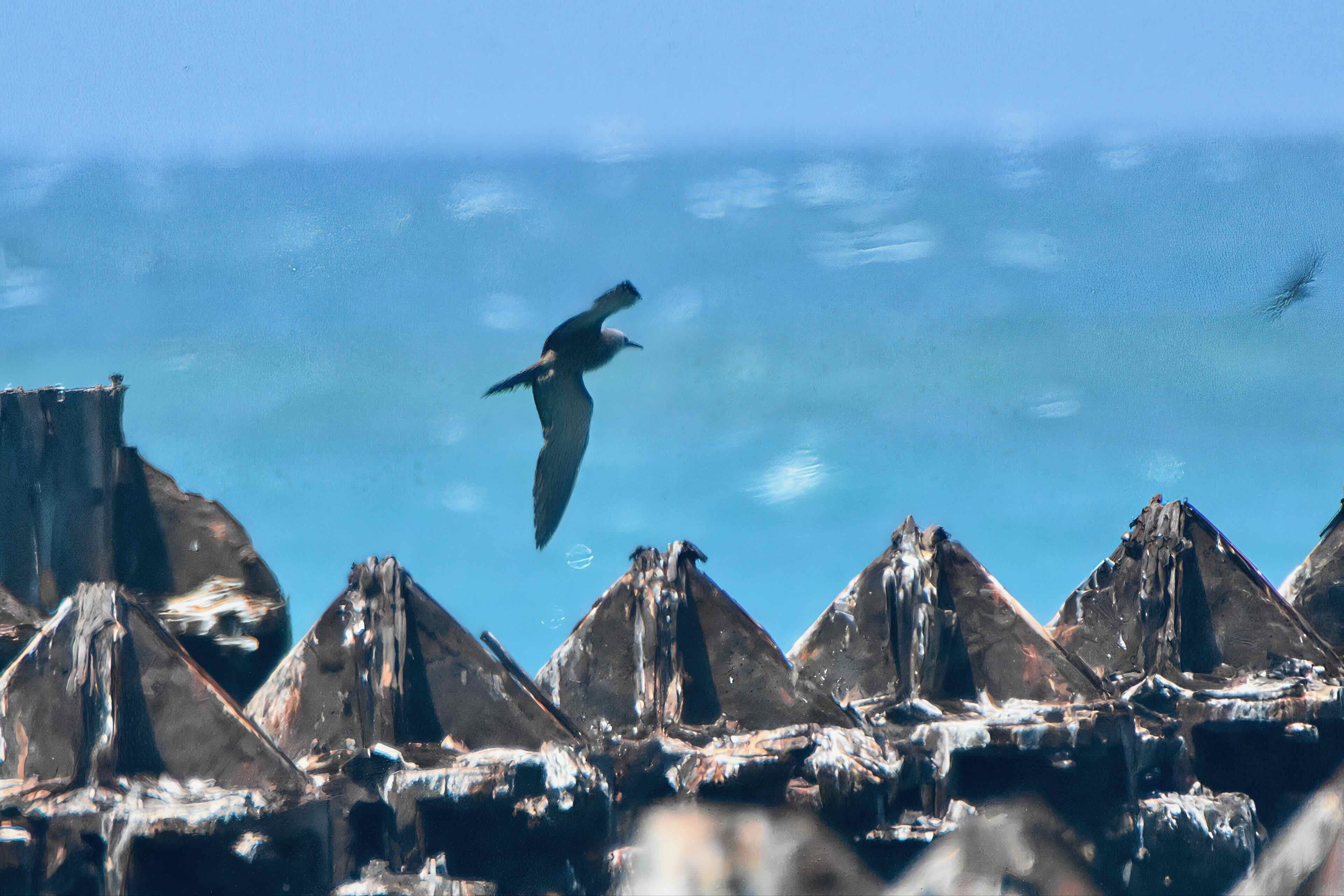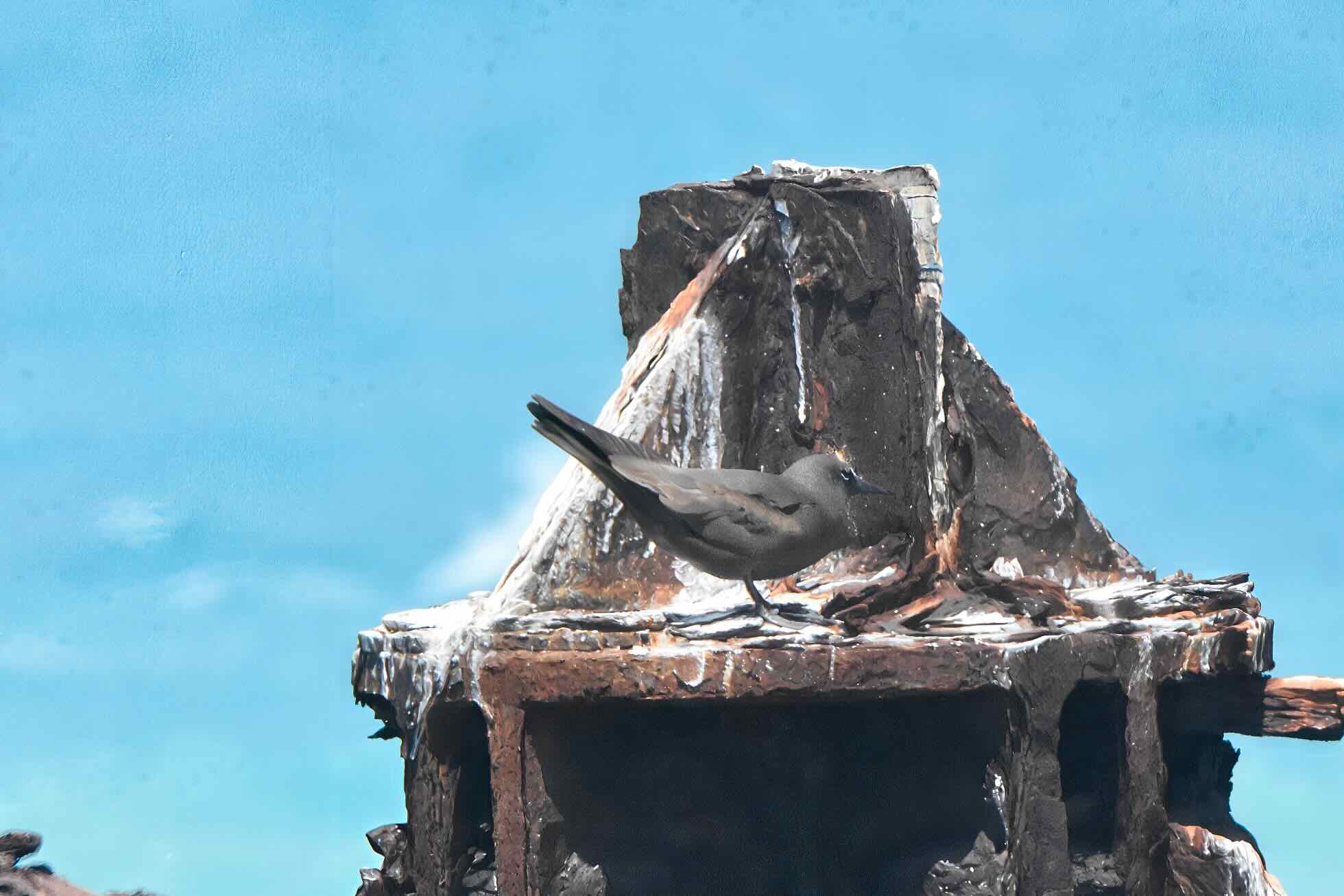
Brown noddy, photographed at Bush Key, Dry Tortugas National Park, Monroe County, in April 2017.
Mariners of old had few kind words for the brown noddy, Anous stolidus. They generally regarded it as a stupid bird.
Stupid, because living on isolated islands, brown noddies had no contact with humans and no fear of them. A sailor could find one sitting in its nest, walk up to it and grab it without a fuss. None other than Charles Darwin thought little of the noddy and a fellow pelagic bird, the brown booby.
Said Darwin, “Both are of a tame and stupid disposition, and are so unaccustomed to visitors, that I could have killed any number of them with my geological hammer.”
The very name, noddy, is slang for stupid. And the scientific name isn’t a whole lot better. Anous comes from the Greek words meaning silly or unmindful; stolidus derives from the Latin meaning dull or foolish.
Stupid birds? No, just not aware that we humans don’t always have the best of intentions. Other, non-western, seagoing cultures actually learned to use brown noddies to find fish and to find their way as navigational guides.
Noddies are in fact terns, though at first they might not look much like a tern. You might call them the un-tern because their looks are so much different than the typical tern. Noddies have a dark brown body with a white cap, while most terns have a white body with a dark cap. The noddy’s tail is straight to the forked tail of the typical tern. The bill is black and on the long side.
They are fairly large, with a body length of about 15 inches and a wingspan of about 32 inches, roughly the size of a sooty tern. Both males and females sport similar looks, but the guys are larger.
We mention the sooty tern because the only place in Florida that you’re likely to see a brown noddy is on a tiny spec of an island called Bush Key, 70 miles west of Key West. Noddies share the island with sooty terns.
Bush Key is part of Dry Tortugas National Park, and it’s the only place in the continental United States where either bird nests. (Sooty terns occasionally will form small colonies along the Gulf Coast, but Bush Key is the only permanent colony and the only brown noddy colony period. Both birds do nest in Hawaii, however.)
If you go, bring a decent pair of binoculars or a high-powered telephoto lens, because Bush Key is mostly off-limits to us human folk while brown noddies and sooty terns are nesting, which is most of the year. The photos on this page were taken at a distance, as close to the birds as is permissible.
Brown noddies are, as we noted, pelagic birds, meaning they spend a portion of the year flying over tropical and subtropical waters around the globe. There are a few brown noddy colonies in temperate areas such as Gough Island in the South Atlantic. They nest on coastal and oceanic islands.
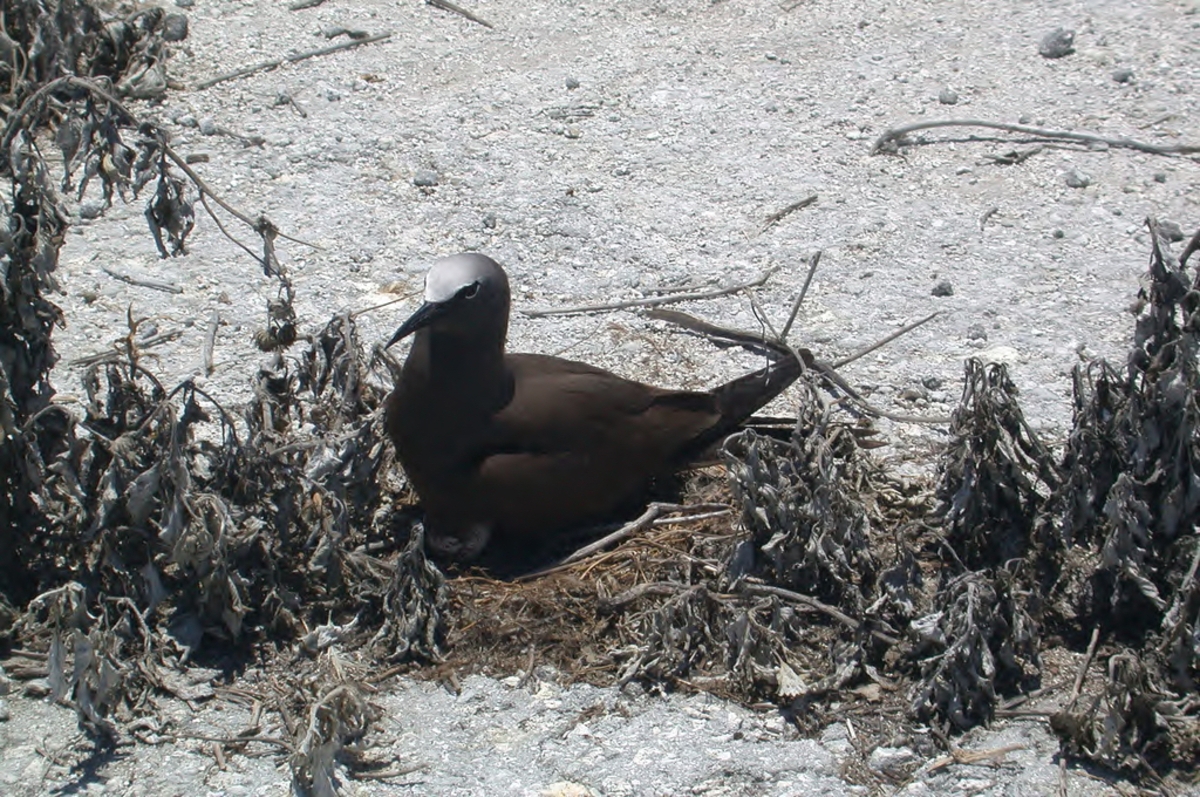
Nesting brown noddy on Eastern Island, Midway Atoll. Public domain photograph by John Klavitter, U.S. Fish and Wildlife Service.
And while Bush Key is their only nesting site on the North American continent, brown noddies occasionally will be spotted off shore along both the Atlantic and Gulf of Mexico coasts as far north as the Carolinas and as far west as Texas. Hurricanes and tropical storms can drive them inland.
Brown noddy pairs are what scientists call site loyal, returning to their original nesting grounds every year. They’ll even reuse the same nest, adding to the structure each time.
On Bush Key, brown noddies typically nest between three and 12 feet off the ground, usually in beach cedar trees, but also in red mangroves and prickly pear cactus. The nest is a collection of sticks and seaweed, with bits of rock, shell and coral added. Over the years, the structures can get fairly large.
In some places, brown noddies are ground nesters, but not on Bush Key, according to the Florida Fish and Wildlife Conservation Commission.
Brown noddies begin to return to Bush Key as early as mid-January and will stay into October. Mating takes place between February and early July. They’ll leave in October and begin the cycle anew in January.
The noddy mating ritual involves a series of bowing and, uh, nodding. Another inspiration for the name, perhaps. After the preliminaries are done, male and female get to work building the nest.
Female noddies lay a single egg, which require somewhere around five weeks of incubation. Both parents share sitting duties. We note that in a report done in the late 1980s or early 1990s, the FWC noted 35 or 36 days as the period generally cited in the literature, but also questioned it, since it’s substantially longer than other terns.
In any regard, brown noddies fledge at six or seven weeks; until then, both parents share the chore of feeding them regurgitated seafood. Young noddies stay near the nest and are fed by their parents for varying lengths of time. On Gough Island in the South Atlantic, it’s typically 11 days; in tropical Hawaii, it’s 100 days.
Noddies might attempt to raise a second chick if the first attempt fails.
So what do noddies eat and how do they hunt? Menu items include small fish like anchovies (hold the pizza) and sardines, squid, insects and some fruit.
Brown noddies can plunge dive for prey, flying high over the water until they see a juicy morsel, then plummet into the water head first. But more typically, they’ll fly low to the water’s surface and skim for a meal. They’ll spot predator fish chasing schools of prey, picking off the small fry as they come to the surface.
The International Union for Conservation of Nature gives brown noddies a “least concern” rating on its vulnerability to extinction scale because of their vast range and extensive number of nesting sites. Florida considers noddies a species of special concern largely because of its single nesting colony and vulnerability to predators.
Brown noddies are member of Laridae, the gull and tern family.
Dry Tortugas National Park
Photo Gallery — Click on photo for larger image